

Hydrafacial vs Traditional Facials: What’s the Difference?
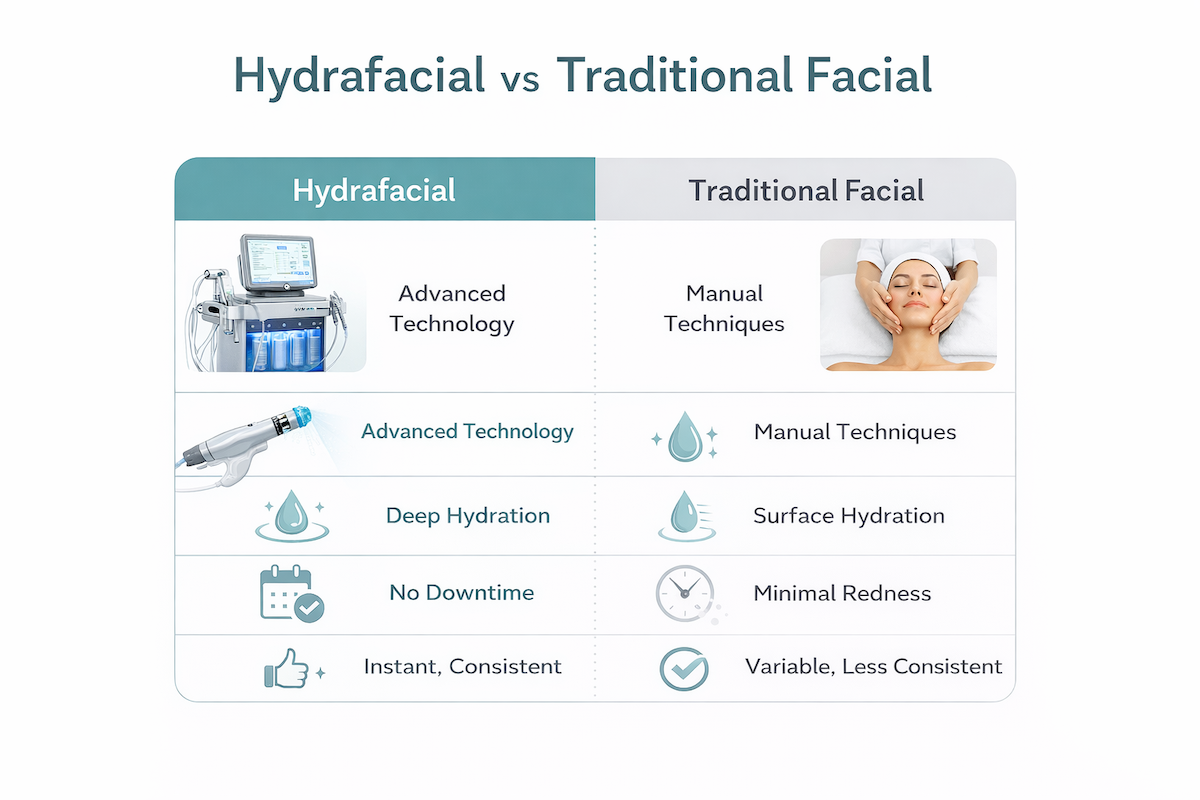
When comparing Hydrafacial vs traditional facials, the key differences come down to technology, consistency, and results. While traditional facials rely on manual techniques, Hydrafacial uses advanced vortex technology to cleanse, exfoliate, and hydrate the skin with predictable outcomes and no downtime.
In a climate like Miami, where heat, humidity, sun exposure, and pollution can impact skin health year-round, choosing the right facial treatment matters. Many patients in Miami prefer Hydrafacial treatments because they provide deep cleansing and hydration without irritation or downtime, making them ideal for maintaining clear, balanced skin in a warm, coastal environment.

What Is a Traditional Facial?
A traditional facial typically includes cleansing, exfoliation, extractions, masks, and moisturizers performed manually by an esthetician. The results can vary depending on the products used, the provider’s technique, and your skin’s sensitivity.
Traditional facials may be relaxing and beneficial for general skin maintenance, but they often lack the precision and consistency of technology-driven treatments.
What Is a Hydrafacial?
A Hydrafacial is a medical-grade facial treatment that uses a patented vortex system to cleanse, exfoliate, extract impurities, and infuse the skin with hydrating serums—all in one session.
Unlike traditional facials, Hydrafacial treatments deliver controlled exfoliation and suction while simultaneously hydrating the skin, making them suitable for a wide range of skin types and concerns.
Key Differences Between Hydrafacial and Traditional Facials
Technology vs Manual Techniques
Hydrafacial uses a device-based system that delivers consistent pressure, exfoliation, and serum infusion. Traditional facials depend entirely on manual application, which can vary from one treatment to another.Results and Consistency
Hydrafacial results are typically visible immediately after treatment. Traditional facials may require multiple sessions before noticeable improvement occurs.Downtime and Comfort
Hydrafacial treatments are known for zero downtime, while traditional facials—especially those involving extractions—may cause redness or irritation.Which Facial Is Better for Different Skin Concerns?
Acne-Prone Skin
Hydrafacial can help remove congestion and excess oil while delivering clarifying serums. Traditional facials may aggravate acne if extractions are aggressive.
Aging or Dehydrated Skin
Hydrafacial delivers antioxidants, peptides, and hydration directly into the skin, making it effective for improving texture and supporting anti-aging goals.
Traditional facials may provide hydration, but results are often shorter-lived.
Sensitive Skin
Because Hydrafacial exfoliation is controlled and customizable, it is often better tolerated by sensitive skin compared to manual exfoliation techniques.
Hydrafacial vs Traditional Facial: Quick Comparison
The table below summarizes the key differences between Hydrafacial and traditional facial treatments based on technology, results, hydration, and downtime.
| Feature | Hydrafacial | Traditional Facial |
|---|---|---|
| Technology-based | Yes | No |
| Immediate results | Yes | Sometimes |
| Downtime | None | Possible |
| Custom serums | Yes | Limited |
| Suitable for sensitive skin | Yes | Varies |
Which One Should You Choose?
If you’re looking for a relaxing experience with basic maintenance, a traditional facial may be sufficient. However, if your goal is visible results, consistent outcomes, and no downtime, Hydrafacial is often the preferred choice.
Many patients incorporate Hydrafacial treatments into a broader skincare plan alongside RF microneedling or laser skin rejuvenation for enhanced results.
Final Thoughts
Understanding the difference between Hydrafacial vs traditional facials helps you make an informed decision based on your skin goals, lifestyle, and expectations. A professional consultation ensures the right treatment plan for optimal skin health.
Ready to get started? Schedule a Hydrafacial consultation to determine the best treatment for your skin.